
L'anno dell'elefante — no 1 Un miércoles, de 2026

The Berlin Clown Gazzette

journal berlinois tous les jours, quand j'en ai envie

Reviews — Information — Biographies — Nachrichten

Administration & Rédaction

jye — Directeur*in
Page 1 of 4
The Berlin Clown Gazzette Issue 1 — Page 1
The Berlin Clown Gazzette Issue 1 — Page 2
The Berlin Clown Gazzette Issue 1 — Page 3
The Berlin Clown Gazzette Issue 1 — Page 4
swipe

Editorial Notice

The Frankfurt Fool Dispatch claims we’ve “run out of original sad ideas.” This from a publication that recently published Why Your Dreams Don’t Matter: A 40-Part Series. We invented running out of ideas. They’re just photocopying our exhaustion.

We also note that the München Merriment Monitor has begun an advice column with striking similarities to our own, though their columnist “Jingles McWoesome” lacks the lived-in exhaustion that comes from actual years spent in Berlin’s winter darkness.

To both publications: imitation is flattery. Flattery is suspicious. We’re watching you.

Der Clowns-Kongress: Dispatch from a Correspondent Who Could Not Leave

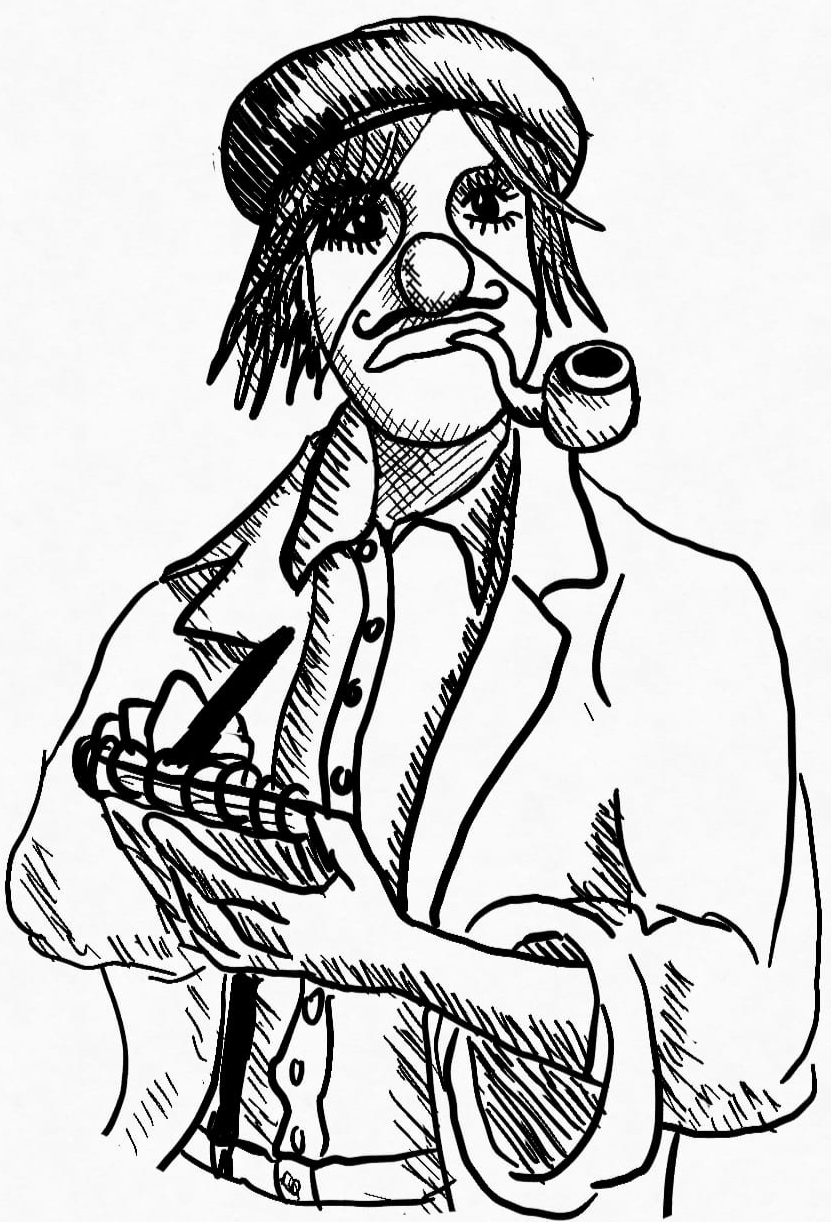
Sketch of B.C.E. Neiderlage

I arrived at the Klown Congress in high spirits, a full bladder and a very fine frock: new to me, one hundred years old to the world, and perfectly suited to the winter night. I felt magnificent striding next to my wingman as we graced the steps of the Hebbel Theatre. Unfortunately, the moment I crossed the threshold into the heated lobby, the frock became an oven and I, the roast.

The Hebbel was built in the Jugendstil style in the year 1908, it only had one bomb fall on it, and by 1945, it was the only operating theatre in Berlin. Many plays previously deemed degenerate by The Most Popular Fascists were performed here. I mention this because I was now standing in that same lobby, a degenerate myself in more ways that I can count.

Still, bravery is a reporter’s virtue: I composed myself, prepared to find a water closet, and immediately ran into a fellow clown, a balloon artist of such skill and imagination that the laws of physics tremble before their creations. Beautiful things, monstrous things, disgusting things: balloons bent into shapes the human mind was not meant to contemplate. Turns out my wingman had arranged for this interception, and I became engrossed in some conversation about streetwear while my bladder filed a formal complaint.

Soon we made our way up the ornate stairs to the balcony seats where I deposited my woolen layers. Unhindered by the sweltering garments, I had nearly reached the door leading back to the toilets when an the usher materialized before me with the kind of bureaucratic solemnity usually reserved for border control.

“I’m sorry”, they announced, “but I’m locking the door now. The show is about to start.” And they gently closed it in my face. Knowing I’d miss the show if I left, I marched back to my chair with a full bladder and an empty notebook, ready to report whatever I survived long enough to witness.

The Show

The show opened with a monologue: a very unhappy clown sat on a stool in front of red velvet curtains. I think she was smoking. She challenged us, insulted us, insulted the world, and assured us the would not be a happy one: I was already delighted.

When the curtains parted, the stage looked as if someone had dropped one half of a circus ring on a sandy beach and walked away. The ring, a raised platform striped red and white, circled a vast mound of sand; the performers could use it like the lip of a volcano. From various corners of the space, the ensemble emerged: pompous clowns, beautifully dressed clowns, clowns radiating menace, clowns radiating hope.

A sharply angled figure stepped forward with immaculate posture. When he opened his mouth, the voice that spilled out was not human: it was the timbre of an alien deity addressing a minor planet. Surtitles appeared above the stage translating his proclamations. This was the ringleader and he carried the air of someone who could execute a subordinate with ease.

Soon enough, he did.

The first clown stepped forward into the ring, unfurling a black whip. She was dressed in a sort of harlequin attire, her face painted in fierce geometric patterns, almost tribal. She appeared to usher a giant monster onto the stage: a great circular spotlight that prowled across the sand, roaring, snarling.

Things went well at first. The luminous disk obeyed her commands. Its roars and snarls came from a beatboxer DJ clown standing behind a laptop in the corner. Soon the tamer lost control, and the light-beast rampaged around the ring with utmost violence. It would have been a full massacre if not for the ringleader who shot the poor creature with an imaginary gun. Later, the ringleader, offended or threatened or bored, shot the beatboxer as well.

Mortality continued to be a theme, with one clown claiming to have found a solution to all global crisis. Their gibberish language was contagious, their manic optimism unstoppable. They radiated the energy of a prophet, or a malfunctioning blender. Their method: attempted hanging. Attempted electrocution in a bathtub. Attempted impalement on a bed of nails. All failures. All glorious.

And then came Dicknose: a clown with a phallic flesh colored nose, addressing society with specific and accurate grievances. They invited audience members onto the sand, played with them, derailed themselves when necessary, and stitched the chaos back together.

Throughout the night, the clowns returned to a central truth: audiences are terrible.

As an audience member myself, I could not agree more. They mocked us, reprimanded us, whispered backstage about how we “weren’t giving enough.” Sitting there, bladder in open revolt, I felt genuinely seen.

The show finally came to a close with strange lights, eerie music, and a clown birthing scene right out of a David Lynch film. The audience gave a standing ovation and multiple curtain calls. But not everyone was thrilled. One person I interviewed found it “too intellectual.” Another, with an informed opinion on the matter, declared: “This isn’t clown to me.”

For myself, I may have entered Der Clowns-Kongress overheated in a vintage frock and unable to pee. I may have been trapped by a door-guard with a taste for procedure.

But my dearest readers, what unfolded before me was a rare event: a sprawling, chaotic, skillful congress of clowns, shifting from cosmic authority to beatbox wildlife, from despair to satire, from foolishness to philosophy. This may have been more choreographed theatre than loose, direct clown, but they erected no fourth wall.

Did I survive long enough to take notes? Barely.

Was it worth the imprisonment? Absolutely.

The show delivered an urgent and beautifully presented message: more clowns are needed.

~Your Increasingly Devoted Correspondent, B. C. E. Neiderlage


Play created and cast by: Walter Bart, Pina Bergemann, Wine Dierickx, Matijs Jansen, Joost Maaskant, Leon Pfannenmüller, Maartje Remmers, Marleen Scholten and Hanneke van der Paardt. Marvelous creatures of Theaterhaus Jena and Wunderbaum. Sacha Zwiers is credited for the delightful costume design.

Continue reading →

Joanna Bassi — The Innocence of Humor

Dear Ceaseless Reader, I will write this review in a strange way. It will be both a review of the show, as well as a clown history review. You see, my own knowledge and research begins to become inseparable from the knowledge presented at the show. Now, I invite you to travel along with me.

The Journey

The journey to the Kuriosum began, as all proper pilgrimages must, in confusion. I had received word that Joanna Bassi — a name spoken with the reverence one reserves for saints and/or true scoundrels — would be presenting a history of her and her family’s art under the title Die Unschuld des Humors or The Innocence of Humor, and so I set forth, balanced atop my bicycle through frigid streets that chilled the bones of my unshoed hands. It was my first approach to this particular venue: a collection of buildings, vehicles, contraptions and gardens dropped into a lot as if an entire circus ground had simply never left, accumulating attachments over the decades. These are Berlin’s cultural hearts: these seemingly temporary shacks growing organically, defiantly. Spaces of true creativity and art which have made the city the wonder that it is. (Spaces our brave government hopes to eradicate as quickly as possible for the sake of progress and productivity. Godspeed.)

The air was festive, winter coats standing around fire barrels, holding steaming mugs of blood-red elixirs. Merchants hawking their wares. Art, handmade clothes, jewels. I asked a man selling keychains where to find the stage. He’d never heard of one, but directed me to a Glühwein vendor who told me I should go through the garden. I nodded as if that made perfect sense, eventually finding a path between some bushes. It wound through industrial wreckage fashioned into furniture and overgrown with plants, and led to the theatre hidden behind the greenery. Finally inside, and thoroughly stamped by the ticketmaster, I turned around to find Joanna Bassi herself! Dressed in gold and white layers, poofy sleeves, a feathered cone hat, she fixed me with a look reserved for the perpetually late. I tried to appear unabashed as I hustled across the entire auditorium, the eyes of the audience upon me, just in time for the performance to begin.

The Performance

A violin sat upright on a chair, and to its right, Joanna spoke to us directly, as if we were all friends meeting for tea. She transports us back to the 18th century: to the origins of Circus and Clown. Of course, fools and tricksters stretch back to antiquity, likely before homo sapiens made the mistake of getting involved in agriculture. Circus itself started as a way to show off horse-riding skills. Clowns, acrobats, jugglers, and others were brought in to add variety the equestrian shows. The Circus ring itself allowed for the audience to see the riders, and also permitted riders to do amazing tricks, like standing on a galloping horse, due to the centrifugal forces generated by the circular path. Being a strongly visual affair, the circus could cross language barriers, and so many began international tours. It here that clowns found their home.

Clowns became famous the way an actor or a singer is famous today. Names like Charlie Rivel (famous in Berlin), Grock (who they called the king of clowns), and Walter Galetti commanded serious respect. While European circus resisted the industrialization and “respectable family entertainment” branding of the PT Barnum circus in the United States, they lagged behind some of the state supported artistry of the Soviet Union, and began to ossify. Circus, she explained, stopped evolving. It became hereditary repetition: you did what your parents did, and theirs before them. The acts became focused around preservation. The whole enterprise a mausoleum of itself, rolling from town to town. Meanwhile, society moved on, and the image of clown became fixed and twisted by businessmen who put the image to productive use selling hamburgers. Ronald McDonald. Daytime children’s programming. A figure that once satirized power became a figure that served it. And with this shift came suspicion. The clown, defanged and commercialized, grew uncanny. People began to fear what they had once celebrated.

The clowns, whose art had always been responsive, improvisational, and on the level of the common people, could not remain in a form that refused to change. And so many left their home of circus.

This was the era, my dear readers, that drew me across the Atlantic. The street clowns. The buskers who performed in piazzas and markets, who built crowds from nothing. Joanna saw it rise, and has seen it fade. The reasons deserve their own investigation, which we will soon publish.

Grock’s Violin

After many stories, she lifted a violin — Grock’s very own violin, she told us, whose story we hope to publish. She played it for us as images of 19th century clowns appeared via projector.

For years, Joanna had researched her family history, however, the photographs she found frustrated her. The clowns in them looked so stiff. Rigid backs, frozen faces. It was impossible to get a sense of personality. But of course, in those days, you had to hold a pose perfectly still for an eternity while the old cameras captured the image. One could get the impression that people were simply stiff back then.

So she kept searching. Endless calls. Pestering French authorities. Until finally she received word from a film digitizer in the Bibliothèque nationale in Paris. He led her down into the dungeons of that building, sat her before a screen, and showed her some of the oldest moving pictures in existence. They gave her the copies which she put on for us to see. Filmed outside in Lyon, bouncing balls on their heads and playing in the most skillful yet silly way. These ghosts of the 19th century, performing in front of strange new devices which captured them without requiring stiff postures. And one of them was her great-grandfather. After the films, she brought us to the present. Much of her career behind her, she presents herself as a transmitter of what came before. History is so easily lost with the passing of time and generations. It haunts her, she told us — the question of how long she will still be able to perform, “They say the first thing to go as you age is your balance.”

She finished the show by balancing Grock’s violin upon her forehead, a quote projected behind her which I furiously scribbled down:

“Such as angels, they are neither men nor women, though probably the most human of us all… Clowns are from beyond, beyond mistakes, truths, lies… Clowns play everywhere, in Circus, in Theatres, in the Streets, but also in Hospitals and war zones… we may discover a clown within ourselves! How wonderful! But beware of its coming out, for a clown gets lost where there no longer is humanity.”

~Your Relentlessly Incorrigible Correspondent, B. C. E. Neiderlage

Continue reading →

You receive: A magical artifact of immense power

We receive: Your soul and eternal service

Contract valid until the death of the Dark Lord, binding you to his Evil Will. You are not permitted to die before he does.

Send your application to [email protected]

Advice Column

Dear Patches,

I think my upstairs neighbor is learning the trombone. I am too shy to knock. I figured someone else would complain. It has been four months.

— Sleepless on Sonnenallee


Dear Sleepless,

Four months. That’s long enough to know this is serious. They are not giving up. You must respect this, even as it destroys you.

Have you considered moving? Have you considered wax in the ears? Have you considered that perhaps you are witnessing the birth of a legendary Trombone-ist who could shake the very pillars of our collective understanding of music and that your suffering is, in a small way, historic?

— O.G.D. Patches

Letter to the Editor

Dear Gazette,

Your recent ranking of Berlin’s Saddest U-Bahn Platforms placed Bismarkstraße at #8. I have spent seventeen years commuting through Bismarkstraße (including the never-ending renovations which are “almost completely finished”). I have tripped seven times. I have watched perfectly good graffiti removed and replaced with nothing. And once you are done facing the usual existential mess, you look up to find the Iron Chancellor’s distorted face staring at you while you wait for the train to come screaming around the corner.

The Berliner Verkehrsbetriebe (BVG)‘s hope to encourage reflection about the station’s controversial namesake has only resulting in my nausea as Otto von Bismark’s ovoid eyes stare me down. The ghost has even begun colonizing my dreams.

~ Name Withheld, Charlottenburg

Advertisement

Dr. Wilhelm's Anxiety Clinic

Totengasse 19, Berlin, Fifth Floor (The Stairs Are Part of the Treatment)

Specializing in:

  • Fear of Success (and its cousin, Fear of Failure’s Success)
  • Worry That You’re Boring
  • Certainty That Everyone Noticed (They Did)
  • The Sense You’ve Forgotten Something (You Have)

New evening appointments available for those anxious about taking time off work to address their anxiety about taking time off work. Once cured, clients will be promptly moved to alternating morning and afternoon hours.

“I’ve been coming here for six years. I think it’s helping, but I’m afraid to stop in case I’m wrong.” — M. Kristof

Local Resident Finally Learns Neighbor's Name After Nine Years, Immediately Forgets It

A Prenzlauer Berg resident achieved a milestone in urban living yesterday by successfully learning their neighbor’s name during a chance encounter while retrieving the mail, only to lose the information approximately forty-five seconds later when asked to repeat it.

“I think it was Max? Marley? Morgan? It definitely started with an M,” reported Mx. Robinero Bergmann, 43, who has lived three meters away from the neighbor for nearly a decade. “Or possibly a B? I remember thinking it was easy to remember.”

The neighbor, whose name remains unknown, was reportedly very kind about repeating it. Witnesses say Bergmann nodded with confidence, and seemed incredibly natural about the whole thing.

“The worst part is I’ll see them again,” Bergmann told our reporters. “Maybe tomorrow. Maybe in an hour. I’ve already used up my one chance to ask naturally. There’s just no way out of it.”

When asked what Bergmann plans to do, they stared into the middle distance and said, “I’m going to check my mail.”

The Gazette reached out to the neighbor for comment but we were not sure which buzzer to press.

Continue reading →